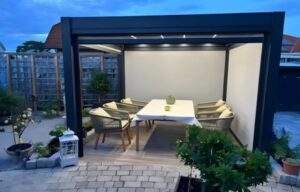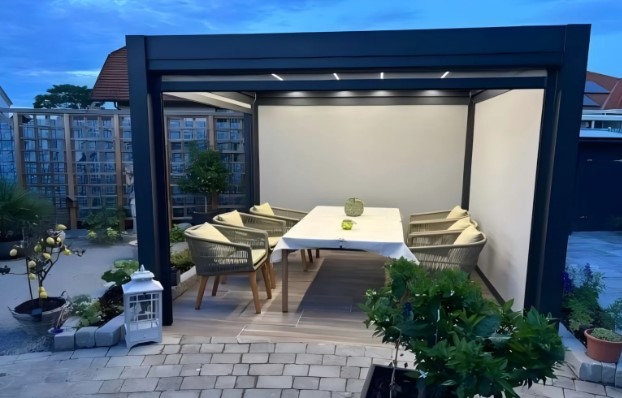
Having an outdoor space can often prove challenging throughout the seasons with many issues to take into consideration. From harsh sunlight on your patio during the summer months, to the unpredictability of rain disrupting any outside meal or events. However, having a fixed roof can cause issues in terms of limited light and airflow. Adjustable pergola systems can help resolve some of these issues by allowing you to have control over the amount of shade and airflow within your outdoor area whilst not fully restricting it.
When choosing what structure you want to go with, there are a few things to consider. The quality of the material, build quality, roof functionality and durability to weather changes will all affect how your pergola performs over time.
Why Material Quality Matters in Outdoor Structures
Pergolas remain exposed to sunlight, moisture, temperature changes, and wind throughout the year. Consequently, the material used in their construction has a direct effect on maintenance requirements and long-term performance. Timber structures can offer a traditional appearance, but they may require periodic staining, sealing, or treatment to protect against moisture and deterioration.
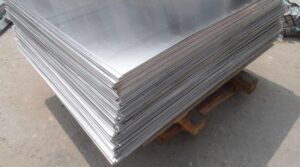
Aluminum provides another option, particularly for properties where durability and lower maintenance are priorities. It does not rust in the same way as ordinary steel and can withstand outdoor exposure without requiring regular painting. For this reason, an aluminum pergola can be a practical addition to modern gardens, patios, restaurants, and hospitality spaces.
Adjustable Louvers Make Outdoor Areas More Versatile
One of the benefits of having a louvered roof is the versatility it brings. You can easily adjust the blades to suit the current weather conditions. Open the blades for more sunlight and airflow or shut them to create shade and protection from the rain. This helps create a more versatile outdoor space.
Managing Sunlight and Ventilation
With motorised controls you can easily adjust the roof. This means you can quickly adjust the blades to suit the amount of sunlight you’re getting during the day. Having the blades slightly open during warmer afternoons can help to keep the airflow flowing.
This also proves beneficial in restaurants and hotels where you require comfortable seating outdoors. The staff can easily adjust the roof to create a more enjoyable atmosphere for your customers.
Structural Strength Should Be Part of the Decision
The appearance of a pergola may attract attention first, but its structural specifications deserve equal consideration. Beam dimensions, support posts, and roof blade thickness all contribute to the overall construction. These details become particularly important when installing a pergola in an area that regularly experiences strong winds or heavy rainfall.
For example, the Strong-200 model uses thickened 6063-T5 aluminum alloy profiles. Its product specifications include 200 × 40 × 1.8 mm louver blades and 200 × 130 × 2.0 mm main beams. These reinforced components are designed to provide greater structural stability than lighter standard configurations.
| Component | Strong-200 Specification |
| Louver blades | 200 × 40 × 1.8 mm |
| Main beams | 200 × 130 × 2.0 mm |
| Support posts | 150 × 150 mm |
| Frame material | 6063-T5 aluminum alloy |
| Surface finish | Powder coating |
| Roof operation | Motorized control |
When comparing models, buyers should also check the manufacturer’s stated wind and snow load ratings, installation requirements, and local building regulations rather than assuming that thicker profiles alone guarantee suitability for every climate.
Choosing the Right Size for Your Property
The dimensions of a pergola should reflect how the outdoor area will actually be used. A smaller structure may be sufficient for a seating corner, while a larger installation could accommodate an outdoor dining table, lounge furniture, or several seating arrangements. The Strong-200 is available in several standard dimensions, including 3 × 3 m, 3 × 4 m, 3 × 5 m, 4 × 4 m, 4 × 5 m, and 4 × 6 m. Custom sizing is also available for projects with unusual layouts or specific installation requirements.
Before choosing a size, measure the available ground area and consider walking routes, furniture placement, drainage, and clearance around doors and windows. These practical details help prevent a structure from overwhelming the space or restricting movement.
Small Features Can Improve Everyday Usability
Adding extra features to your pergola can really help increase the functionality. Adding built in LED lighting means you can enjoy your patios after dark. The Strong-200 comes with 4 built in LED lights on the louver blades so you can enjoy your evenings outside.
Powder coated aluminium will give your pergola an extra layer of protection. As aluminium is resistant to corrosion it can mean less maintenance is required compared to other materials.
Making a Long-Term Investment in Outdoor Living
A well-chosen pergola should complement the property’s design while making its outdoor areas more functional. Adjustable louvers, sturdy construction, suitable dimensions, and integrated lighting all contribute to a better overall experience.
The most suitable option depends on the property’s climate, available space, and intended use. Comparing structural specifications and customization options before installation helps avoid unnecessary compromises. For homeowners and commercial developers considering a durable, adjustable outdoor structure, the aluminum pergola range from Pergoras offers a useful starting point for exploring modern louvered roof designs.