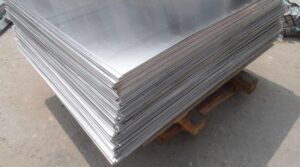
Choosing between 5052 and 3003 aluminum sheet depends on the strength, corrosion resistance, formability, and working conditions required for your project. Both alloys are widely used in industrial manufacturing, construction, transportation, and general fabrication. However, their different alloy compositions give them distinct performance characteristics.
An aluminum sheet 3003 is a popular choice for applications that require good formability, moderate strength, and reliable corrosion resistance. In comparison, 5052 aluminum sheet offers higher strength and excellent resistance to marine and industrial environments, making it suitable for more demanding structural and equipment applications.
For manufacturers, distributors, and industrial buyers, understanding these differences helps reduce material costs and improve product performance. In this guide, Shaanxi Shunchengtian compares 5052 and 3003 aluminum sheet to help you select the right alloy for your application.
1. What Is the Difference Between 5052 and 3003 Aluminum Sheet?
The main difference between 5052 and 3003 aluminum sheet is their alloy composition and resulting mechanical properties.
3003 aluminum belongs to the aluminum-manganese alloy series. Manganese improves its strength compared with commercially pure aluminum while maintaining good ductility and corrosion resistance. This makes 3003 suitable for products that require bending, forming, and general fabrication.
5052 aluminum belongs to the aluminum-magnesium alloy series. Its magnesium content provides higher strength and excellent corrosion resistance, particularly in marine environments. It is also suitable for applications that require good fatigue performance and durable sheet metal components.
Another important distinction is heat treatment. Neither 3003 nor 5052 can be strengthened by conventional precipitation heat treatment. Instead, their strength can be increased through cold working, with the final properties depending on the selected temper.
For buyers comparing 5052 vs 3003 aluminum sheet, the right choice depends on whether the priority is easier forming and economical fabrication or higher strength and demanding environmental performance.
2. 5052 vs 3003 Aluminum Sheet: Key Properties Compared
The following table summarizes the main differences between these two aluminum alloys.
| Property | 3003 Aluminum Sheet | 5052 Aluminum Sheet |
| Alloy series | Aluminum-manganese | Aluminum-magnesium |
| Main alloying element | Manganese | Magnesium |
| Strength | Moderate | Generally higher |
| Corrosion resistance | Good | Excellent, especially in marine environments |
| Formability | Excellent | Very good |
| Weldability | Good | Good |
| Machinability | Generally limited | Generally limited |
| Heat treatment | Not heat-treatable | Not heat-treatable |
| Typical applications | Heat exchangers, tanks, kitchen equipment, general sheet metal | Marine components, fuel tanks, enclosures, transportation equipment |
Actual mechanical properties vary with thickness, temper, and applicable product standards. Buyers should check the relevant material certificate and specification before placing an order.
3. Which Aluminum Sheet Has Higher Strength: 5052 or 3003?
5052 aluminum sheet generally offers higher strength than 3003 aluminum sheet in comparable product forms and tempers. This difference makes 5052 a preferred option for applications where sheet metal must withstand greater mechanical loads or maintain its shape under demanding service conditions.
For example, 5052 is commonly used for marine panels, equipment enclosures, transportation components, and industrial tanks. Its strength can help manufacturers design durable components while balancing weight and structural requirements.
3003 aluminum sheet, however, provides sufficient strength for many general fabrication applications. It is widely used in heat exchangers, storage equipment, architectural components, and household products where extreme mechanical strength is not the primary requirement.
When comparing the two alloys, buyers should avoid selecting material based on alloy designation alone. Temper is equally important. For example, H32 and H34 tempers have different mechanical properties from softer O temper material.
If your project requires a specific tensile strength, yield strength, or elongation value, request the corresponding technical data for the required thickness and temper.
4. 3003 vs 5052 Aluminum Sheet: Which Has Better Corrosion Resistance?
Both alloys offer good corrosion resistance, but 5052 aluminum sheet is often preferred for applications exposed to seawater, salt spray, and harsh outdoor environments.
The magnesium content of 5052 contributes to its excellent resistance to marine and atmospheric corrosion. This makes it a practical choice for boat components, marine equipment, fuel tanks, and industrial enclosures exposed to moisture.
3003 aluminum sheet also resists corrosion effectively in many atmospheric and general industrial environments. It is commonly used in food-related equipment, heat exchangers, roofing components, and storage applications where a combination of corrosion resistance and formability is required.
However, neither alloy is immune to corrosion under every condition. Chemical exposure, temperature, surface finish, contact with dissimilar metals, and maintenance practices can affect long-term performance.
For coastal projects or equipment exposed to saltwater, 5052 is often the stronger candidate. For ordinary indoor or outdoor fabrication, 3003 may provide sufficient corrosion resistance at a suitable overall cost.
5. Which Is Easier to Bend and Form: 3003 or 5052 Aluminum?
3003 aluminum sheet is generally an excellent option for deep drawing, bending, and complex forming operations. Its ductility makes it useful for producing curved panels, cookware, heat exchanger components, and other parts with intricate shapes.
5052 aluminum sheet also offers good formability, particularly in softer tempers. It can be bent, stamped, and fabricated into a wide range of industrial components. However, its higher strength may require greater forming force than 3003 under comparable conditions.
For manufacturers using press brakes, stamping equipment, or roll-forming lines, alloy selection should account for material thickness, temper, bend radius, tooling, and the desired finished geometry.
If your production process involves complex shapes and extensive forming, 3003 may be the more convenient option. If the finished part needs greater strength without sacrificing practical formability, 5052 may provide a better balance.
Always confirm the minimum bend radius and forming limits for the selected temper before starting large-scale production.
6. Common Applications of 3003 and 5052 Aluminum Sheet
Although both alloys are used in sheet metal manufacturing, their typical applications differ according to performance requirements.
Common applications of 3003 aluminum sheet include:
- Heat exchangers and HVAC components
- Cooking utensils and kitchen equipment
- General-purpose storage tanks
- Roofing and architectural sheet metal
- Decorative panels and formed components
- Food processing equipment and containers
Common applications of 5052 aluminum sheet include:
- Marine panels and boat components
- Fuel tanks and industrial liquid containers
- Electrical cabinets and equipment enclosures
- Transportation and automotive components
- Pressure-related equipment designed to applicable codes
- Industrial panels exposed to demanding environments
These are typical uses rather than absolute limitations. The final selection should consider design loads, corrosion exposure, fabrication methods, and applicable industry standards.
For manufacturers supplying different markets, keeping both alloys available can help address a wider range of customer requirements.
7. Is 5052 Aluminum Sheet More Expensive Than 3003?
5052 aluminum sheet often carries a higher material price than 3003 because of differences in alloy composition, production requirements, and market conditions. However, the actual price gap changes with aluminum market prices, sheet thickness, temper, dimensions, surface finish, and order quantity.
3003 may offer a cost-effective solution for general-purpose products that do not require the additional strength of 5052. Choosing 5052 can be more economical over the product lifecycle when its improved mechanical performance or corrosion resistance reduces maintenance, replacement, or material-related risks.
When requesting an aluminum sheet quotation, buyers should compare equivalent specifications rather than alloy names alone.
Important purchasing details include:
- Alloy and temper, such as 3003-H14 or 5052-H32
- Sheet thickness, width, and length
- Required dimensional and flatness tolerances
- Surface finish and protective packaging
- Applicable quality standards and inspection requirements
- Order quantity and delivery schedule
Shaanxi Shunchengtian can help buyers evaluate material requirements and identify suitable aluminum sheet specifications for their intended applications. Request a quotation based on your actual dimensions, temper, and volume to obtain a more meaningful cost comparison.
8. How to Choose the Right Aluminum Sheet for Your Project
Selecting between 5052 and 3003 aluminum sheet starts with identifying the most important performance requirement.
Choose 3003 aluminum sheet when your project prioritizes excellent formability, moderate strength, good corrosion resistance, and economical general-purpose fabrication. It is particularly suitable for heat exchangers, kitchen equipment, formed panels, and many everyday industrial products.
Choose 5052 aluminum sheet when higher strength, excellent marine corrosion resistance, and durable industrial performance are more important. It is often the better fit for marine equipment, transportation components, fuel tanks, and heavy-duty sheet metal fabrication.
Before finalizing your purchase, evaluate five factors: required mechanical properties, operating environment, forming complexity, applicable standards, and total project cost.
Neither alloy is universally better. The best material is the one that meets your engineering requirements without unnecessary material expense.
Shaanxi Shunchengtian supports aluminum material sourcing for industrial and commercial applications. Contact our team with your alloy preference, required thickness, temper, dimensions, and estimated quantity to discuss a suitable aluminum sheet solution.
Conclusion
The choice between 5052 vs 3003 aluminum sheet comes down to the balance between strength, formability, corrosion resistance, and cost. 3003 is a strong candidate for economical general fabrication and complex forming, while 5052 is often preferred for higher-strength components and marine or industrial environments.
By comparing the required temper, dimensions, and service conditions, buyers can select the right aluminum sheet for long-term performance and manufacturing efficiency.
Shaanxi Shunchengtian is ready to help you evaluate aluminum sheet options for your next project. Contact us to discuss your material requirements and request a quotation.