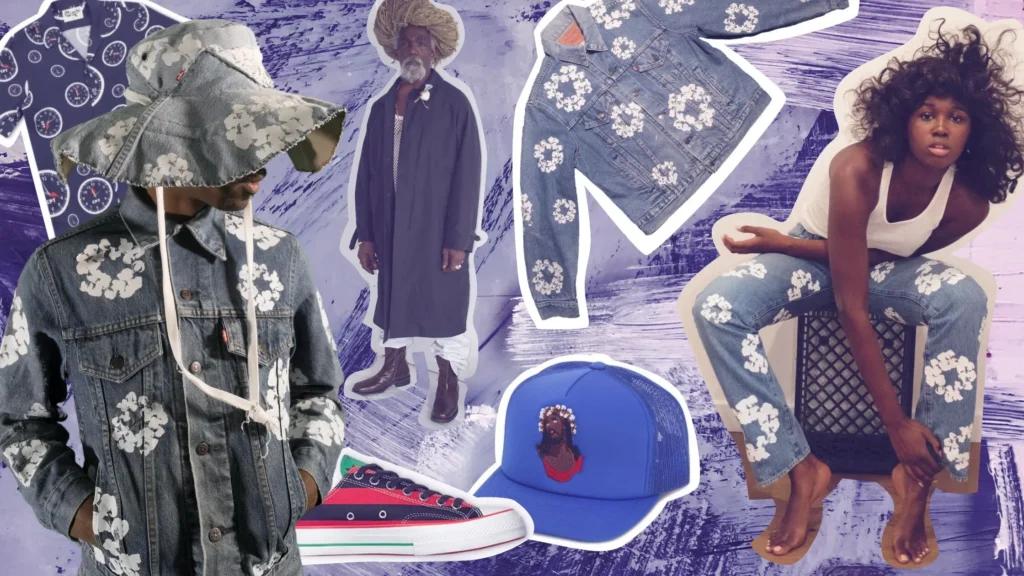
Denim Tears, a brand founded by Tremaine Emory, transforms clothing into a vessel of memory and resistance. It merges the material history of cotton with the social history of Black America, creating garments that speak to both pain and pride. Denim Tears reclaims denim—a fabric historically tied to slavery and labor—and repositions it as a symbol of empowerment. Through its designs, the brand invites wearers to carry stories of struggle, survival, and cultural renaissance. Its aesthetic is not merely fashion but a protest woven from the threads of generational trauma and resilience.
The Fabric of History: Cotton and Colonial Legacies
Cotton, the foundation of denim, holds deep roots in colonial exploitation and slavery. Before it became a symbol of casual comfort, it was the currency of forced labor. Denim Tears reinterprets this material legacy, reminding us that the fabric we wear today was once a tool of oppression. Emory’s work draws attention to the invisible histories embedded in textiles, compelling audiences to confront how everyday materials carry collective memory. By reclaiming cotton’s narrative, Denim Tears transforms a painful history into a dialogue about liberation, turning material heritage into a medium of historical reckoning.
Fashion as Political Discourse
Fashion often masquerades as apolitical, yet Denim Tears challenges that neutrality. Each garment operates as a statement, confronting racism, capitalism, and cultural appropriation. The brand disrupts mainstream fashion’s tendency to commodify Black culture without context, asserting instead that clothes can speak truth to power. Denim Tears occupies the intersection of art and activism, where every seam becomes a manifesto. In doing so, it redefines the fashion industry as a site of protest rather than passive consumption. Through visual storytelling, Emory ensures that Black experience is not just represented but respected within global style narratives.
The Power of Symbolism: Wreaths and Cotton Blossoms
Iconic motifs like cotton wreaths and blossoms recur throughout Denim Tears collections, each symbol layered with historical meaning. The cotton wreath—both memorial and reclamation—references the suffering of enslaved Africans and the endurance of their descendants. These symbols challenge viewers to confront uncomfortable truths about the origins of American wealth. At the same time, they honor ancestral strength, turning symbols of exploitation into emblems of survival. The beauty of these motifs lies in their duality: pain and pride coexist within their design, reminding us that aesthetics can be instruments of both remembrance and rebellion.
Denim as Cultural Palimpsest
Denim, long associated with workwear and Americana, becomes a palimpsest in Emory’s hands—a surface rewritten with new meanings. Denim Tears inscribes Black narratives onto a fabric historically coded as white and working-class. This act of rewriting destabilizes the dominant cultural script, allowing new voices to emerge through threads and stitches. The worn textures of denim mirror the erosion and endurance of memory itself. By distressing, embroidering, and printing over the fabric, Emory performs an act of cultural re-inscription, where the past and present coexist visibly. Denim becomes not only material but memory itself.
Collaboration as Resistance
Denim Tears thrives on collaboration, using partnerships to extend its message. From Converse to Levi’s, these collaborations embed protest within mainstream fashion systems, forcing institutions to confront the histories they often ignore. Emory’s strategy is not rejection but infiltration—using the machinery of global brands to broadcast messages of justice and remembrance. Each collaboration becomes a dialogue between corporate fashion and cultural resistance, questioning who benefits from style and storytelling. Through these projects, Denim Tears proves that collaboration, when guided by conscience, can transform capitalist frameworks into platforms of historical awareness and collective empowerment.
Visual Storytelling and Emotional Memory
The visual language of Denim Tears—photography, lookbooks, and campaigns—serves as an archive of emotion. Emory curates images that blend nostalgia, sorrow, and pride, allowing Black memory to inhabit fashion’s glossy spaces. The photography often recalls family portraits and protest imagery, situating fashion within the continuum of lived experience. By visualizing emotion, Denim Tears crafts a powerful counter-narrative to stereotypes that dehumanize Black identity. Each campaign invites reflection on what it means to wear history on one’s body. Through images, the brand transforms memory into feeling, and feeling into a form of political consciousness.
The Role of Pain in Beauty
Denim Tears challenges the notion that beauty must be detached from pain. Its garments are beautiful precisely because they acknowledge suffering. Emory’s designs remind us that Black creativity has always emerged from struggle—that beauty can coexist with grief. This aesthetic of pain and grace resists the fashion industry’s obsession with escapism. Instead of hiding wounds, Denim Tears exposes them, transforming vulnerability into strength. The brand’s ethos echoes the blues tradition: art born from sorrow, shaped into something transcendent. Through this synthesis, Denim Tears redefines beauty as truth—raw, complicated, and profoundly human.
From Garment to Archive
Each Denim Tears piece functions as a wearable archive. Beyond trend or season, these garments preserve cultural memory through material form. They are artifacts of protest, collecting stories of identity, resistance, and survival. By treating clothing as historical text, Emory invites us to read garments as we would literature—full of metaphor and memory. This approach disrupts fashion’s obsession with ephemerality, asserting instead that clothes can endure as vessels of history. Denim Tears transforms the act of dressing into a ritual of remembrance, ensuring that the past is not forgotten but continually re-woven into the present.
Reclaiming the Future Through Fabric
Denim Tears does more than honor the past; it imagines a liberated future. By reclaiming the narratives embedded in textiles, Emory offers a vision of fashion rooted in truth and dignity. His work insists that remembering is a radical act—that protest can be beautiful, and beauty can be revolutionary. In the hands of Denim Tears Hoodie, fabric becomes prophecy: a blueprint for collective healing and transformation. Through its aesthetics, the brand turns memory into momentum, weaving together art, activism, and ancestry. Denim Tears proves that the threads of history can also be the threads of freedom.