In every culture, weddings are important events that celebrate love and unity. And while the concept of the wedding is universal, every culture has its own traditions that reflect values and identity. Some traditions are believed to bring happiness and fortune to a new family, while others are more religious, focusing on blessings and faith.
Of course, people adhere less to traditions now, or not at all. Sometimes people adapt traditions to modern times so that the traditions of the people continue to live on. In this article, we will discuss wedding clothes and rituals around the world, from Bridal Gowns in Toronto to Nigerian geles.
Asian traditions
Asia is rich in traditions, and weddings are no exception. These traditions vary greatly depending on the region. Asian traditions are typically known for their vibrant colours and elaborate ceremonies. Weddings focus not only on the bride and groom, but also on their families and communities. Let’s have a look at the most popular traditions.
Japan
Yuino is an engagement tradition – the parents of the couple exchange presents like sake or dried seafood. Ceremonies are usually held in private rooms at the restaurant, followed by the meal.
Also, there is a tradition about sake, it is called San-San-kudo. The bride and groom drink sake from 3 cups of different sizes. Every cup has its own meaning: the smallest represents the past and respect for ancestors, the middle represents the achievements in the present, and the largest represents the future, hope and harmony for the new family.
In Japan, brides are dressed in all white from head to toe, including make-up, a kimono and a hood called a tsunokakushi.
India
The most famous Indian wedding custom is the Mehdi ceremony. Traditionally, the bride and her closest female family members have their hands and feet painted in henna. The patterns are extremely detailed, so it can take hours of painting. They usually illustrate flowers and other hidden symbols.
The Indian wedding is followed by a lot of pranks. One of the most famous is stealing the groom’s shoes. The bride’s female relatives hide the shoes and give them back only after negotiations with the groom. Typically, they demand money or gifts. This tradition brings happiness and laughter to the family.
The celebrations include a rich food feast, which has food for people from different regions. And what is an Indian wedding without the dances? Bollywood-style dances are the most performed during the wedding day.
China
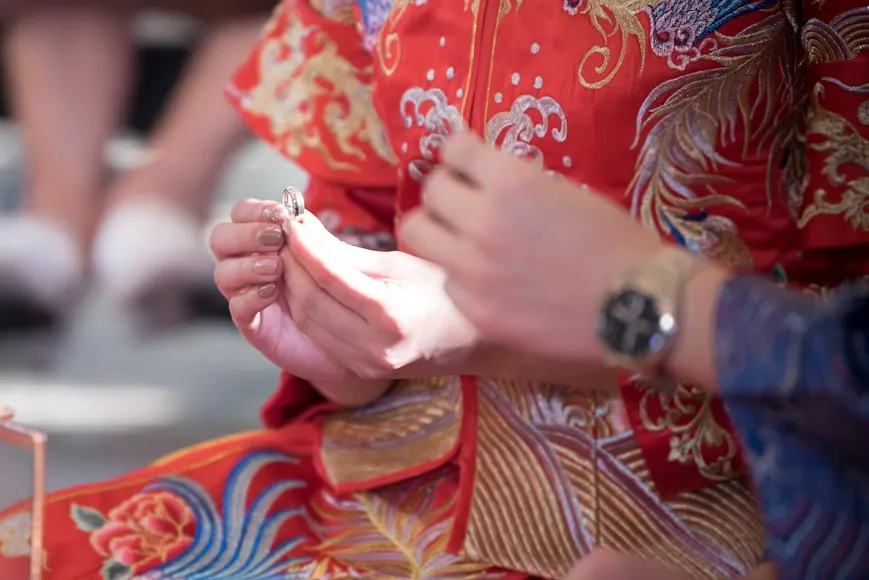
One of the most meaningful Chinese customs is the tea ceremony. During the ritual, the bride and groom kneel or bow and serve tea to the parents. After each one takes a sip, the couple gets an envelope with money or jewellery. The red tea usually contains lotus seeds, dried longans and red dates.
European traditions
In Europe, every country has its own traditions, which are also reflections of history and cultural identity. Let’s review the well-known wedding traditions of European countries.
Greece
The most interesting Greek wedding tradition is shaving the groom. Before putting on the wedding attire, the groom’s closest friends take out a razor and shave the groom. This is done to show trust in each other.
Friends and relatives throw money, almonds, and rice onto the bed of the newlyweds, which is decorated with flowers and perfumes. This symbolises honesty and sincerity. In some regions, babies are placed on the bed to bless the couple with children. Some Greek couples still observe this tradition.
Germany
On the night before the wedding, the friends and family of the couple break porcelain dishes to ward off any evil spirits. Some also believe that the size of the pieces can determine a couple’s happiness in marriage – the smaller the pieces, the happier the couple will be. After that, the couple cleans the mess, symbolising how they will have to work together.
The wedding is also accompanied by pranks from the guests. These include kidnapping the bride, where the groom has to fulfil the kidnappers’ demands, as well as other simple jokes, such as filling the room with balloons.
Ukraine
Almost every culture has some kind of bread at the wedding; the Ukrainian wedding cake is called koroway. Usually, it is made by family members or friends. It looks like a big cake, decorated with dough in the shape of flowers and ears of corn, marshmallow or whipped egg white.
An embroidered towel is laid at the feet of the bride and groom. It represents the path the couple will go together. There is a belief that whoever steps on the towel first will be the head of the family.
America
From north to south, each country celebrates marriage in its own way. The American wedding customs reflect their rich diversity.
Canada
Traditionally, brides wear white or ivory gowns, although modern brides may choose different colours and styles. Many modern couples prefer to explore Toronto bridal shops before selecting their perfect outfit, for example, MISSIA. During the dance, guests pin money onto the bride’s and groom’s clothes to wish them prosperity. In some regions, guests throw the money at the couple.
There is a pre-wedding tradition called the Stag and Doe party (also known as Jack and Jill). The couple, their families, and friends organise an event before the wedding. This event includes dancing, games, and other activities. The goal is to raise money to cover wedding costs or support couples.
USA
The most beautiful tradition, which is actually present in many other countries, is that the bride and groom do not see each other on the wedding day before she walks down the aisle. Some want to surprise their future husband, while others want there to be an element of anticipation and mystery.
The bride usually wears a wedding gown and a garter, a small piece of fabric on her thigh. The groom must remove it and throw it to the unmarried men; whoever catches it will be the next to marry.

Conclusion
A wedding is truly a romantic event, and every country has its own traditions that make it so special. Of course, over time, fewer and fewer couples adhere to traditions and try to adapt them to modern times. But even if traditions do not look quite the same as they used to, they continue to exist.