I still remember landing in the U.S. for the first time. My phone was dead on mobile data, and I had no idea how to get connected. I wandered around the airport hunting for free Wi-Fi just to figure out how to reach my Airbnb. After a few trips like that, I started paying attention to eSIM vs physical SIM. Both have quirks. Which works better depends on how you travel.
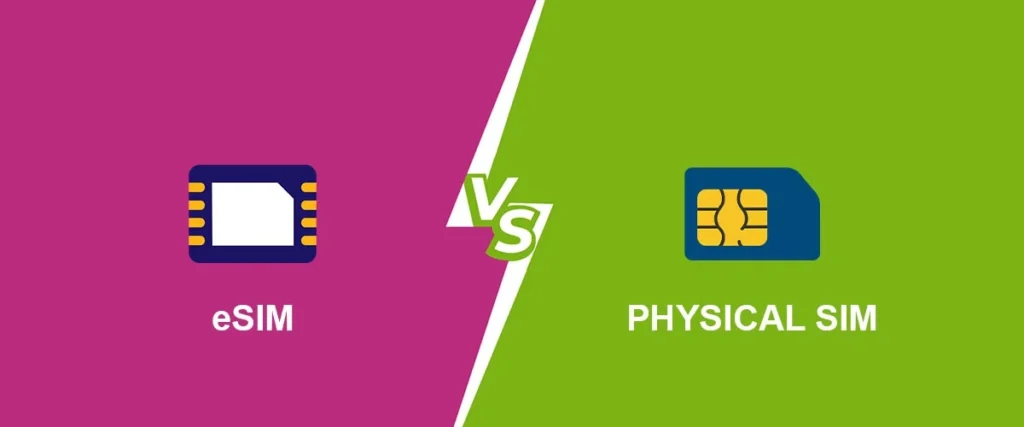
A physical SIM is the classic option, the little plastic card you slot into your phone. Buy it at a store or airport kiosk, pop it in, and you’re connected. Done. An eSIM is different. No card, nothing to hold. It’s digital, built into your phone. You scan a QR code or download a carrier profile, and your phone hooks onto the network. Feels futuristic, but it works.
I’ve tried both across the U.S., from New York to San Francisco, and even in tiny towns where coverage can get sketchy. The difference isn’t just tech, it’s how your trip feels.
Airports, Data, and First Impressions
Landing at JFK or LAX can be overwhelming if your phone isn’t working. Everyone’s juggling cash, credit cards, SIM trays. I used to stand in line at the airport kiosk for a physical SIM. Ten minutes later, I could finally Google a taxi or find my hotel.
With an eSIM, it’s almost instant. Scan a QR code I saved before leaving home, and I’m online as I leave the terminal. Small convenience, but it makes a huge difference.
Rural towns in Oregon or small U.S. destinations sometimes drop coverage. A physical SIM from a local carrier handles that better. Convenience sometimes comes at a small cost in reliability.
For U.S. trips, checking a resource like eSIM for USA travelers helps you see where eSIMs work well and where backup options might be smart.
eSIM vs SIM Card Travel
The main difference is how you get connected.
Physical SIM: You find a store or kiosk. Outside big cities, that can be tricky. You swap your old SIM. Activation can take a few minutes.
eSIM: Scan a QR code or download a profile. No tray swapping, no pins, no waiting in line. Some phones let you store multiple eSIMs, handy if you’re hopping countries. Mentally, it feels lighter—no tiny card to worry about.
But physical SIMs have their moments. In areas with patchy coverage, they connect faster or more reliably. One time, my eSIM wouldn’t connect right after landing, and I had to dig through settings. Stressful when you just want directions.
So physical SIM vs eSIM abroad isn’t about which is “better.” It’s about context.
Pros and Cons From Experience
eSIM Pros
- No card to lose
- Switch carriers digitally
- Instant setup in most cities
- Great for short trips
eSIM Cons
- Patchy in small towns
- Not all phones support it
- Sometimes needs Wi-Fi for setup
Physical SIM Pros
- Works everywhere
- Often better local coverage
- Can share with other devices
Physical SIM Cons
- Easy to misplace
- Must find a store
- Setup can take longer
- Harder to swap across countries
City-hopping? eSIM wins for convenience. Rural trips? Physical SIM is safer.
When to Use Each
Here’s what I do:
eSIM: Preloaded for city stays—New York, Los Angeles, Miami. Instant data. No lines. Physical SIM: Small towns or rural areas. Or if hotel Wi-Fi isn’t reliable.
Sometimes I use both. eSIM handles my main number. A cheap physical SIM backs up extra data. Tiny effort, huge peace of mind.
Travel Tips That Help
- Keep a small SIM tray opener
- Save your eSIM QR code offline
- Make sure your phone is unlocked
- Carry a pouch for physical SIMs
My Take
After years of juggling both, there’s no universal winner. It’s about flexibility.
City trips? eSIM shines. Rural trips? Physical SIM gives peace of mind. Multi-country? Maybe both.
A little planning—saving QR codes, checking coverage, or using an eSIM for USA travelers keeps things smooth. Then you can focus on what matters: exploring, eating weird food, and getting lost in a new city without panicking.
Traveling shouldn’t feel complicated. Knowing when to use an eSIM versus a physical SIM is just part of traveling smart.