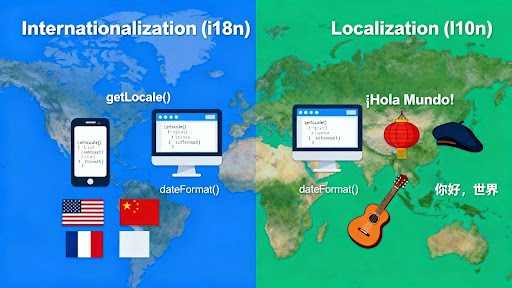
Internationalization and localization are often used interchangeably, but they represent two distinct processes in software development. Internationalization vs localization is a key concept for anyone building products for global audiences. Internationalization (i18n) refers to designing software so it can be adapted to various languages and cultures, while localization (l10n) is the actual process of adapting that software for a specific language or region. A robust translation management system is essential for effective localization, ensuring consistency and accuracy across markets.
Both internationalization and localization are crucial for creating a truly global product. They work together to help businesses reach wider audiences and deliver personalized experiences. In this article, we’ll explore the differences between internationalization and localization, why they matter, and how they complement each other.
What Is Internationalization?
Internationalization, often abbreviated as i18n, is the process of designing and developing software so it can be easily adapted to different languages, regions, and cultures. This is typically handled by developers and engineers during the initial stages of product development.
The goal of internationalization is to neutralize code, content, and design, making it easier to adapt the product for new markets without major re-engineering. For example, instead of hardcoding text, developers use placeholder keys that can be replaced with translations later. Internationalization also involves supporting cultural formatting, such as date and time formats, number systems, and text direction.
Advantages and Disadvantages of Internationalization Testing
Advantages:
- Internationalization testing helps ensure that software can function effectively across different languages, cultures, and regions, expanding its potential market reach.
- It improves the architecture and maintainability of the source code, making it easier to adapt for new locales in the future.
- By supporting a single codebase for multiple markets, internationalization testing reduces the cost and effort required for maintaining different versions of the software.
- It enables global release without significant additional time or cost, making it easier to scale the product internationally.
- Automation of internationalization tests (such as date format validation or currency conversion) saves time and ensures consistency across locales.
Disadvantages:
- Internationalization testing can increase product expenditure, especially when targeting multiple markets with diverse requirements.
- There is a higher risk of encountering non-legislative tax compliance issues or regulatory challenges in different regions.
- The process may require frequent product changes due to fluctuations in regional trends and demands.
- Testing across multiple languages and locales can be complex, especially when dealing with varying text lengths, character sets, and writing directions.
What Is Localization?
Localization, or l10n, is the process of adapting software, apps, or websites for a specific locale or market. This goes beyond simple translation and includes customizing elements like currency, date formats, images, and even UI design to match local preferences and regulations.
Localization is usually carried out by translators and localization specialists who work on the user-facing aspects of the product. For example, localizing for Arabic requires not only translation but also adapting the interface for right-to-left (RTL) text, which can impact layout and design.
Advantages and Disadvantages of Localization Testing
Advantages:
- Localization testing ensures that the software is culturally and linguistically appropriate for a specific target market, improving user experience and engagement.
- It helps identify and fix defects early, reducing the time and cost of post-release fixes.
- Localization testing can make the application more flexible and scalable, supporting future expansion into new markets.
- Automated localization testing can reduce maintenance costs and speed up the delivery of high-quality localized products.
- Testing with native speakers or local experts helps uncover cultural nuances that internal testers might miss, leading to a more authentic user experience.
Disadvantages:
- Localization testing can be expensive, especially when hiring linguistic and domain experts for each region.
- It may involve dealing with complex legal and data policies in different countries, which can slow down the process.
- Understanding the cultural and technical requirements of each region can be time-consuming and resource-intensive.
- Localization testing may be delayed by issues such as Double-Byte Character Set (DBCS) storage variations or differences in device functionality.
How Internationalization and Localization Work Together
Internationalization lays the foundation for localization. Without proper internationalization, localization becomes much more difficult and time-consuming. Internationalization is typically a one-time effort, while localization is an ongoing process as new markets are targeted.
For example, when internationalizing a dashboard, developers set up keys for messages like “Welcome!” and “¡Bienvenidos!”. These keys allow the software to display the correct language based on the user’s locale. Localization then involves translating these keys and adapting other elements for each target market.
Why Both Are Important
Internationalization and localization are both essential for businesses aiming to expand globally. Internationalization ensures that products can be easily adapted for new markets, while localization ensures that the product feels native and relevant to users in each region. Together, they help companies deliver a seamless and personalized experience to customers worldwide.
FAQs
What is the difference between internationalization and localization?
Internationalization is the process of designing software to support multiple languages and cultures, while localization is the process of adapting software for a specific market or locale.
When should I use internationalization vs localization?
Internationalization should be implemented during the design and development phase to ensure the product can support multiple languages and regions. Localization should be used when you are ready to adapt your product for a specific market.
Can I skip internationalization and just localize my product?
Skipping internationalization makes localization much more difficult and costly. Internationalization prepares your codebase for localization, making it easier to adapt your product for new markets.
What are some best practices for internationalization?
Use placeholder keys for text, support cultural formatting (dates, numbers, currencies), and organize your source code for easy localization.
How does localization impact user experience?
Localization ensures that your product feels native to users in each region, improving usability and engagement.
What tools can help with internationalization and localization?
Translation management systems like Lokalise can streamline both processes, making it easier to manage translations and adapt your product for different markets.