A polygraph test sounds simple on the surface. You sit down, answer a few questions, and a machine tells whether you’re lying. Clean, decisive, almost cinematic. But the reality is messier, more human, and honestly, more interesting than that.
People walk into these tests carrying nerves, assumptions, and sometimes a quiet fear that a machine will expose more than they intend. And here’s the thing—polygraphs don’t actually detect lies. They detect something else entirely.
Let’s unpack that.
What a Polygraph Actually Measures
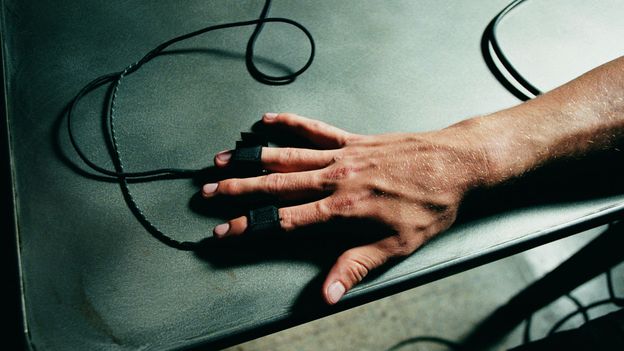
At its core, a polygraph records physical responses. Heart rate. Breathing patterns. Skin conductivity. That last one—often called galvanic skin response—is basically how much your palms sweat.
The idea is simple: when people lie, they feel stress. That stress shows up in the body. The machine picks it up.
But stress isn’t exclusive to lying. That’s where things get complicated.
Imagine this. You’re in a quiet room. Wires attached to your chest and fingers. Someone you don’t know is asking questions that matter—maybe about your job, your past, or something more serious. Even if you’re telling the truth, your body might react. Your pulse might jump just because the question hits close to home.
The machine doesn’t know why your body reacted. It just records that it did.
The Human Element Behind the Machine
People often picture the polygraph as the authority. In reality, the examiner plays a huge role.
A skilled examiner isn’t just hooking you up to a device and pressing record. They’re watching you. Listening closely. Noticing pauses, tone shifts, small hesitations.
Before the actual test even begins, there’s usually a long conversation. They’ll go over the questions in advance. That might sound reassuring, but it’s also strategic. They want to establish a baseline—how you respond when you’re calm versus when something unsettles you.
Here’s a small scenario.
Say someone is asked, “Have you ever taken something that didn’t belong to you?” That’s a broad question. Almost everyone hesitates, even if it’s just remembering a childhood moment. That hesitation creates a reaction. The examiner notes it.
Later, more specific questions are asked. The comparison between those reactions becomes part of the interpretation.
It’s less about a single spike on a graph and more about patterns over time.
Why People Believe in Polygraphs
Despite all the nuance, polygraphs carry a certain mystique. Maybe it’s because they’ve been used in criminal investigations, government screenings, and high-stakes situations.
There’s also a psychological effect at play.
When people believe a machine can detect lies, they’re more likely to confess. Not because the machine caught them—but because they think it will.
That belief alone can be powerful.
Let’s be honest, sitting in that chair can feel intimidating. Even confident people sometimes second-guess themselves. “What if my body betrays me?” That thought alone can change how someone answers questions.
And sometimes, that’s exactly the point.
Accuracy: Not as Clear-Cut as You Think
If you’re hoping for a simple percentage—something like “polygraphs are 95% accurate”—you won’t find a clean answer.
Estimates vary widely. Some claim high accuracy under controlled conditions. Others argue the results are unreliable in real-world settings.
The problem is consistency.
Two people can react very differently to the same question. One might stay calm even while lying. Another might spike with anxiety while telling the truth.
Think about someone who’s naturally anxious. Maybe they hate being evaluated. Maybe authority figures make them uneasy. Their baseline stress is already elevated before the first question is asked.
Now compare that to someone who’s practiced at staying composed under pressure. Their readings might barely shift—even if they’re being deceptive.
The machine records both without context.
Can You Beat a Polygraph?
This question comes up a lot, and the answer isn’t as dramatic as movies suggest.
There’s no magic trick that guarantees you’ll “pass.” But there are ways people try to influence results.
Some attempt to control their breathing. Others create small physical distractions—like pressing their toes into the floor during certain questions—to alter baseline readings.
Do these methods work? Sometimes they can muddy the data. But experienced examiners are trained to spot unusual patterns.
More importantly, trying too hard to “beat the test” can backfire. Overthinking every response can make your reactions more erratic, not less.
Ironically, the people who struggle most are often the ones trying hardest to appear calm.
Where Polygraphs Are Used Today
Polygraphs haven’t disappeared. They’re still used in certain contexts, though their role has shifted over time.
In the U.S., for example, they’re commonly used in federal employment screening—especially for intelligence or law enforcement roles. Some private employers use them too, though laws restrict this heavily.
In criminal investigations, they’re sometimes used as a tool—not as definitive evidence, but as part of a broader process.
Here’s the key point: results from polygraph tests are generally not admissible in court. That alone tells you something about how they’re viewed.
They’re not seen as proof. More like a piece of the puzzle.
The Emotional Side No One Talks About
What often gets overlooked is how people feel during and after a polygraph test.
Even if you’ve done nothing wrong, the experience can linger. You might replay questions in your head. Wonder if you reacted “wrong.” Question whether your body told a different story than your words.
That uncertainty can be unsettling.
There’s also the pressure of perception. If someone believes you failed a polygraph, it can affect how they see you—even if the result isn’t definitive.
That’s a heavy weight for something that isn’t fully reliable.
So, Are Polygraphs Worth Trusting?
Here’s the honest answer: they’re useful, but limited.
A polygraph can highlight areas worth exploring. It can encourage honesty in certain situations. It can even help investigators focus their attention.
But it’s not a truth machine. It doesn’t read minds. It doesn’t separate fact from fiction with certainty.
It reads bodies. And bodies are complicated.
Context matters. Personality matters. The skill of the examiner matters.
Strip those away, and the data alone doesn’t mean much.
A More Grounded Way to Look at It
Instead of asking, “Does a polygraph detect lies?” a better question might be, “What does this test reveal about human behavior under pressure?”
Because that’s really what you’re seeing.
You’re watching how someone reacts when the stakes feel high. How their body responds to discomfort, memory, fear, or even guilt—real or imagined.
And sometimes, those reactions say more about the situation than about truth itself.
Final Thoughts
Polygraph tests sit in an interesting space. Not quite science fiction, not quite hard science. They’re part psychology, part physiology, and part human interpretation.
If you ever find yourself facing one, it helps to understand what it is—and what it isn’t.
It’s not a machine that knows the truth.
It’s a tool that tries to make sense of signals your body sends under pressure.
And those signals don’t always tell a clean story.
Sometimes they whisper. Sometimes they contradict. And sometimes, they just reflect the simple fact that being human is messy.