What is a Milling Machine?
Precision and versatility are key in manufacturing and metal components production. Milling Machines are one of the main tools for cutting solid materials like metals, wood and plastics. Unlike an “ordinary cutting tool,” a milling machine uses rotary cutters which selectively remove material from a workpiece so that complex shapes or slots or holes or intricate designs can be machined to very high tolerances . So, what is a milling machine and what does it do? So let us discuss how it works, types, and industrial significance.
Understanding the Basics of a Milling Machine:
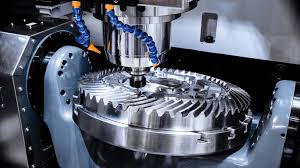
A milling machine is a machine that uses a rotating cutting tool to machine or carve materials. The cutter can reach different surfaces and angles because the workpiece is mounted on a table that can move in all directions . Because of this ability to move on multiple axes, this type of machine is more versatile than other types of machining equipment.
Milling machine also do face milling, end milling, and drilling. This is what makes them an invaluable tool for industries as diverse as automotive, aerospace, electronics and mold making.
How Does a Milling Machine Work?
During the milling process, the workpiece is clamped or placed in a vise on the machine’s table. The rotating cutter is typically fabricated from hardened steel or carbide cutting tool and is mounted on a spindle that moves vertically or horizontally based on the type of milling machine being used.
The spindle spins the cutter at high speeds and the operator controls the feed rate and depth of cut to remove precise amounts of material. The tool moves in the X, Y, and sometimes Z direction and can machine complex geometries and a very smooth surface finish.
More recently, modern CNC milling machines automate the entire process of the machinist or operator outlined above. The operator inputs commands into the machine using proprietary computer programs, and the CNC machine moves the spindle and table with exact precision creating mass quantities of the exact same part .
Different Types of Milling Machines:
There are several configurations of milling machines, which in general are used for particular purposes and precisions:
- Horizontal Milling Machines: The spindle is mounted horizontally, and cutters are placed on an arbor. Ideal for heavy-duty tasks and cutting grooves in large workpieces.
- Vertical Milling Machines: The spindle is positioned vertically, making it suitable for tasks requiring a higher degree of precision and detail.
- CNC Milling Machines: Equipped with computerized controls, CNC machines automate cutting operations and are capable of producing intricate parts with tight tolerances.
- Universal Milling Machines: These machines combine the features of horizontal and vertical mills, allowing for a wide range of operations.
The selection of which machine is dependent upon the complexity of the project, the material and production requirements .
Advantages of Using Milling Machines:
The advantages of milling machines and why they are a vital tool in manufacturing include:
- Precision Machining: Capable of achieving tight tolerances and detailed finishes.
- Versatility: Can work on a variety of materials and perform multiple operations, from cutting to shaping.
- High Productivity: Especially with CNC models, large volumes of parts can be produced consistently.
- Cost-Effective: Reduces manual labor and minimizes errors, lowering production costs over time.
These advantages are ideal for milling machines for parts such as engine blocks, molds, gears and even sensitive electronic components.
Industrial Applications of Milling Machines:
The versatility as well as precision of milling machines are employed in many industries:
- Automotive: Engine parts, transmission parts and custom metal work.
- Aerospace: Turbine blades, fuselage parts, and structure supports.
- Tool and die making: The manufacture of molds, dies, and specialized tools to be used in other manufacturing processes.
- Medical Equipment: Surgical tools and prosthetic devices.
Due to the needs for higher quality and more complex parts from various industries, the milling machine has become key to modern production lines.
Final Thoughts:
The milling machine is not merely a device for cutting but rather a fundamental machine for modern manufacturing because of its highly adaptable precise capabilities. These machines can create detailed geometry and tight tolerances for parts used in automotive, aerospace and other industries, by using rotating cutters and having the ability to move in multiple axes.
Those in pursuit of advanced milling solutions should check out the high-performance machines offered by BORUI CNC to address the milling requirements of modern manufacturers. The emphasis on innovation and quality makes them a reliable and efficient partner for businesses involved in machining operations.
Knowing what a milling machine is and how it functions allows engineers, machinists and manufacturers to determine its place within their manufacturing process.