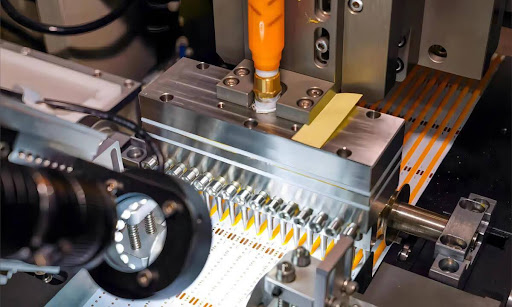
The global construction industry is at a pivotal crossroads. With “Net Zero” targets looming for 2030 and 2050, every component of a building—down to the last meter of accent lighting—is being scrutinized for its environmental impact. Linear lighting, once criticized for its disposable nature in early iterations, has undergone a radical transformation. Today, the most forward-thinking LED strip light manufacturers are no longer just focused on illumination; they are engineering solutions for a circular economy.
In this exploration, we delve into the sustainability metrics that define modern lighting, from luminous efficacy and material toxicity to the “Right to Repair” in architectural installations.
Luminous Efficacy: The First Pillar of Decarbonization
The most direct contribution an LED strip makes to sustainability is its operational efficiency. In the context of a large-scale commercial building, the difference between 100lm/W and 160lm/W is not just a technical stat; it represents a massive reduction in Scope 2 carbon emissions.
Breaking the 160lm/W Barrier
Historically, flexible LED strips struggled with efficiency due to heat losses in small packages and resistive losses in thin PCBs. However, 2025 has seen a breakthrough.
- The Engineering Shift: By using larger, high-efficiency chips and increasing the copper weight of the PCB to 3oz, premium manufacturers have reduced the heat generated per lumen.
- The Impact: High-efficacy strips allow designers to meet strict energy codes (like the EU’s New Energy Label or California’s Title 24) without sacrificing lux levels. Choosing a high-efficacy product from a partner like SignliteLED ensures that the building’s operational carbon remains as low as possible over its 10-year lifespan.
Material Integrity: Beyond RoHS Compliance
Sustainability starts in the supply chain. A “green” LED strip must be free of toxins and sourced from responsible providers.
The Problem with PVC and Phthalates
In the past, waterproofing was often achieved using PVC (Polyvinyl Chloride). PVC production involves hazardous chemicals, and if it catches fire, it releases toxic chlorine gas.
- The Sustainable Alternative: Leading LED strip light manufacturers have transitioned to Food-Grade Silicone. Silicone is inert, UV-resistant, and significantly more durable than PVC. More importantly, it does not “outgas,” ensuring that indoor air quality (IAQ) remains safe for inhabitants, contributing to WELL and LEED credits.
Lead-Free and Halogen-Free Production
The move toward halogen-free PCBs is the next frontier. By eliminating brominated flame retardants (BFRs), manufacturers ensure that when the product eventually reaches its end-of-life, it does not leach persistent organic pollutants into the soil.
The Circular Economy: Design for Longevity and Repairability
The “throwaway culture” of cheap electronics is the enemy of sustainability. A truly sustainable LED strip is one that stays out of a landfill.
Modular System Design
Forward-thinking designers are now implementing modular lighting systems. Instead of “gluing” a strip into a permanent architectural feature, they use clip-in aluminum profiles.
- The Sustainability Benefit: If a single segment of a 50-meter run fails due to an external electrical surge, the maintenance team can replace just that segment rather than the entire installation. This “Right to Repair” philosophy reduces electronic waste (e-waste) by up to 80%.
L70 and Beyond: The 50,000-Hour Promise
The most sustainable product is the one you don’t have to replace for a decade. Professional-grade manufacturers use “Gold-Thread” bonding and high-quality phosphors to ensure that the light output doesn’t just “stay on,” but stays consistent. A strip that loses 50% of its brightness in two years is a failure of sustainability, regardless of its initial energy rating.
Green Packaging and Logistics: The Carbon Footprint of Transit
Sustainability doesn’t stop at the factory gate. The “embodied carbon” of a product includes how it is packaged and shipped.
- Plastic-Free Packaging: We are seeing a shift away from plastic reels toward recycled cardboard or biodegradable polymers.
- Volume Optimization: By engineering thinner, more flexible strips, manufacturers can fit more meters into a single shipping box, reducing the carbon footprint of air and sea freight.
- Localized Distribution: Strategic manufacturers are establishing regional hubs to minimize the distance products travel from the assembly line to the job site.
Case Study: The LEED Platinum Corporate Campus
In a recent landmark project for a tech giant in Silicon Valley, the goal was to achieve the highest possible LEED score.
- The Challenge: The design featured over 5 kilometers of continuous linear lighting in the atriums and exterior facades.
- The Solution: The procurement team bypassed generic suppliers and worked with specialized LED strip light manufacturers who could provide a full Life Cycle Assessment (LCA).
- The Result: By using 48V ultra-high-efficacy strips, the project reduced wiring copper by 30% and lighting energy consumption by 45% compared to the baseline. The use of silicone co-extrusion ensured that the exterior lights would not need replacing for at least 15 years, a key factor in the project’s “Durability and Planning” credits.
Regulatory Drivers: ErP, Title 24, and the Future of Compliance
Global regulations are forcing the industry to “go green.”
- EU ErP Directive (2019/2020): This regulation introduced strict “CRI” and “Flicker” requirements, effectively banning low-quality, inefficient LED strips from the European market.
- Ecodesign Requirements: Future mandates will likely require a “Product Passport,” a digital tag that tells recyclers exactly what materials are inside the strip and how to disassemble it.
The Role of Smart Sensors in Sustainability
As discussed in our previous guide on IoT, the “Greenest Light” is the one that is turned off when not needed.
- Daylight Harvesting: Sustainable manufacturers are now building strips that interface directly with ambient light sensors.
- Thermal Throttling: Smart strips can now detect if they are overheating and dim themselves slightly to preserve their lifespan, preventing premature failure and waste.
Financial Sustainability: The ROI of “Green” Lighting
While sustainable, high-quality LED strips often have a higher upfront cost, the Return on Investment (ROI) is undeniable.
- Energy Savings: Typically pays back the price difference within 12–18 months.
- Labor Savings: Eliminating even one mid-project replacement cycle saves thousands in specialized labor and equipment rental.
- Brand Value: For commercial tenants, being in a “Green Certified” building is a powerful marketing tool that justifies higher rents.
Conclusion
Sustainability in the lighting industry is no longer a niche preference; it is a fundamental engineering requirement. The transition from “cheap and disposable” to “efficient and durable” is being led by a select group of LED strip light manufacturers who understand that the future of light is green.
By choosing products that prioritize high luminous efficacy, non-toxic materials, and circular design principles, architects and engineers are doing more than just illuminating a space—they are protecting the planet. For those seeking a partner committed to these values, SignliteLED provides the transparency and innovation needed to meet the rigorous environmental standards of tomorrow’s built environment.